Baraja de Lotería Mexicana ®
- 4.7
- Rating
- 10.00M
- Installs
- Free
- Price
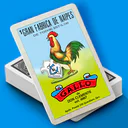
 Analysis by App-foxy
I approached Baraja de Lotería Mexicana ® as a quick way to bring the familiar Mexican lottery card game to a phone without turning the first session into a complicated setup. It is a free card game from Runo Networks, rated for Everyone, and its appeal is easy to understand: the recognizable card artwork, spoken calls, and sound effects make a casual round feel more like a shared table game than a silent digital deck.
That distinction matters. Many mobile card games are built around collecting, competition, or long-term progression. This one is better understood as a digital version of a social pastime. I would recommend it to someone who wants a simple game for family time, a relaxed break, or a way to introduce a younger player to Lotería without first finding a physical deck, board, and caller.
The game has been available since September 27, 2015, and its 4.7 average from roughly 37 thousand ratings suggests that the basic experience has connected with a large audience. More than 10 million installations also make it a familiar option in its niche. Those figures do not replace personal testing, but they do tell me that this is not an obscure experiment with an unfamiliar format.
You May Also Like

 Pandora - Music & Podcasts
Pandora’s Music Is Easy to Start, but Harder to Recover
Pandora’s strength is its low-effort path from a seed to a station. Its weak spot is how much confidence it asks you to place in connection, setup, and quiet recovery.

 AccuWeather: Weather Radar
AccuWeather Review: A Quick, Clear Forecast for Everyday Decisions
For everyday plans, the best forecast is the one you can understand quickly. AccuWeather makes rain timing, radar, and local conditions easy to act on, with a few trade-offs.

 Hill Climb Racing
Why Hill Climb Racing Still Turns Crashes Into One More Run
A tiny car, a bumpy hill and one more upgrade: Hill Climb Racing keeps resurfacing because its simple chaos makes every near-miss feel personal.

 AliExpress - Shopping App
AliExpress Makes Global Shopping Feel Personal, but Shoppers Bear the Risk
AliExpress turns a global marketplace into a pocket-sized discovery engine. Its reach is useful, its shopping loop compelling, and its trade-offs easy to miss.

 Lords Mobile: Kingdom Wars
Lords Mobile Is a Kingdom-Building Routine, Not a Quick Match
A case-by-case verdict on the building, battles, device demands, and social commitments that make Lords Mobile rewarding for some players and exhausting for others.

 PDF Scanner app - TapScanner
TapScanner Makes Paperwork Easier to Capture, Check, and Share
TapScanner makes scanning with a phone feel less like a rescue operation and more like a dependable step in getting work done. Its capture tools are useful, though not flawless.
More From Our News Desk
View All News


What to expect when you open the game
The central experience is deliberately focused. You are dealing with Lotería cards rather than a broad collection of unrelated modes, so the first few minutes are about recognizing the deck, understanding the call-and-mark rhythm, and deciding whether the presentation suits the way you like to play. The store summary highlights original images, voice, sound, and the complete set of cards, and those elements are important because they give the game its character.
The images are not just decoration. In Lotería, recognizing “El corazón,” “La luna,” or another familiar card quickly is part of the fun. A digital version that reduced the cards to generic symbols would lose much of the game’s identity. Here, the visual presentation gives each call something to look for, which is especially helpful for a first-time player who may know the name of the game but not every card in the deck.
The voice changes the mood more than a text-only caller would. I found that spoken calls make it easier to look away from the screen for a moment, listen, and then check the board. That makes the app more suitable for a couch, kitchen table, or small gathering than for someone seeking a fast, intensely competitive card match. The sound also helps younger players follow along, although a quiet environment or headphones may be preferable if other people are nearby.
One useful way to think about the game is as a digital caller and deck, not necessarily as a replacement for every part of a physical Lotería night. If your group enjoys the talk, teasing, and improvised rules around a real table, the phone can support that atmosphere, but it cannot create the social energy by itself. If you mainly need the cards and calls in one place, it is much more convenient than carrying a deck.
The game is free to install, with optional in-app purchases listed from $0.99 to $199.99 per item. That range is worth noticing before you hand the phone to a child or leave purchasing unrestricted. You can start without paying, so I would first use the free experience to decide whether the presentation and pace work for your household. The purchase range makes it sensible to review device controls before treating the app as a family activity.
Who will enjoy this version most?
I see three particularly good audiences. First are people who already enjoy Mexican Lotería and want a portable version for moments when a physical deck is not available. Second are families looking for a low-pressure game that can be explained through pictures and spoken calls. Third are casual players who want something familiar rather than a game that requires learning a large rulebook, building a collection, or maintaining a daily streak.
It is less convincing for players who want deep strategy, online matchmaking, elaborate progression, or a large variety of modes. Lotería has suspense, but the core structure is still based on matching called cards to a board. If your ideal card game involves deck construction, tactical turns, or direct control over every outcome, this will probably feel too simple. That is not a flaw in the traditional game; it is a reminder to choose it for the right reason.
Getting through the first setup without confusion
My advice for a first session is to begin with a small goal: learn the visual language of the cards and complete one round. Do not worry about mastering every traditional expression or trying to make the first game a family tournament. Open the app, pay attention to how the cards are presented, and keep your first session focused on the relationship between the spoken call and the image on your board.
Before starting, make the environment work in your favor. Turn the device volume up enough to hear the caller clearly, but not so high that the sound becomes distracting. If you are playing with another person, place the phone where both of you can see it. A common mistake with mobile board and card games is holding the screen too close to one player, which makes the experience feel solitary even when the game itself is meant to be shared.
The minimum operating system listed for this release is Android 6.0. That makes it accessible to many older Android devices, although the practical experience will still depend on the phone’s screen, speaker, and general condition. On a smaller display, take a moment to identify the card area before the calls become frequent. On a larger screen, two people may be able to follow the board more comfortably from opposite sides of a table.
The current version is 1.7.2. I would check that the app has finished installing and that the audio behaves normally before inviting a group to play. This is less about technical preparation than avoiding an awkward first impression: if the caller is hard to hear or the player is still learning where to look, the first round can feel confusing even when the underlying game is straightforward.
For a child, I would do the first round together rather than simply passing over the phone. The Everyone age rating makes the game broadly suitable for general audiences, but the optional purchases are still a practical reason for an adult to supervise the device. More importantly, playing together lets you explain the traditional idea of marking a matching card instead of assuming that the child will infer every step from the screen.
The first meaningful success
The first satisfying milestone is not winning quickly. It is correctly hearing a call, recognizing the corresponding image, and marking the right place without stopping to ask what to do. Once that happens several times, the game begins to feel natural. I recommend deliberately slowing down during the opening calls, naming the image aloud, and then checking the board. That small habit helps new players build recognition faster than tapping randomly and hoping the correct card is obvious.
If you are playing with someone who knows the physical game, let that person act as a guide rather than a competitor during the first round. They can explain the familiar rhythm, while the app supplies the visual and spoken prompts. This is a better introduction than expecting a new player to learn while everyone else rushes ahead. After one complete round, you can decide whether to add more people or simply repeat the experience with less assistance.
A useful household routine is to use the game as a short shared activity rather than leaving it open-ended. For example, after dinner, one person can hold the phone while everyone else watches for their cards. The caller’s voice gives the group a common focus, and the visual deck provides conversation starters. This works particularly well when you want something more interactive than watching a video but less demanding than a strategy game.
Another practical use is introducing the traditional cards to someone who has only heard about Lotería. The digital format removes the need to explain how to manage a physical deck before the person has even seen the images. I would still explain that the phone is presenting a modern convenience, not replacing the cultural context of the game. The app is strongest as an accessible entry point and a portable way to play.
Common points of friction during a round
The first confusion usually comes from the speed of recognition. A spoken call can seem easy when you are listening casually, but it becomes more demanding when you are also scanning a board. New players may focus on the voice and forget to inspect the image, or stare at the board and miss the next call. The solution is simple: listen first, then look methodically across the board instead of moving your eyes randomly.
Names and pictures can also create hesitation. Someone may know the image but not remember its Spanish name, while another player may recognize the name immediately and miss the visual detail. That difference is normal. I would treat the early rounds as a vocabulary and recognition exercise, especially with children or players who are familiar with the game only through relatives.
Sound can be both a strength and a nuisance. In a group, voice and effects make the round easier to follow; in a shared room, they can become repetitive or interrupt another activity. If you want a quiet solo session, the audio-centered presentation may feel less comfortable than a physical deck or a silent card app. Conversely, if you are using the game as a caller for several people, muting it would remove one of its most useful qualities.
There is also a social limitation that is easy to overlook. A phone can display the cards and provide calls, but players still need to agree on how they will handle a win, a missed mark, or a disputed call. In a physical game, those decisions often happen naturally around the table. With a digital version, I recommend agreeing on the household rules before beginning, particularly when several people are sharing one device.
The free entry point is helpful, but the presence of optional purchases means I would not assume that every part of the experience is intended to be used without checking the screen carefully. If you are setting up the game for a child, use the device’s purchase protections and make it clear that tapping a button may not be the same as starting a round. This is ordinary mobile-app caution, but it matters more when the game is being used casually by a family.
How it compares with a physical deck and other card games
Compared with a physical Lotería deck, the app wins on portability and calling. You do not need one person to shuffle, draw, and announce every card, and the spoken presentation gives a small group a consistent rhythm. It is also useful when you are traveling light or when the physical cards are unavailable. The trade-off is that everyone’s attention is pulled toward one screen, and you lose the tactile pleasure of handling cards and beans or markers.
A physical deck is the better choice when the gathering itself is the main event. It gives each player more space, supports larger groups more naturally, and leaves room for the conversation that happens between calls. I would choose the app for convenience, a first introduction, or a quick round; I would choose cards on a table for a longer family gathering where the ritual matters as much as the rules.
Compared with collectible card games, this title is far easier to enter because you are not building a deck or learning a changing competitive system. That simplicity is its advantage for mixed-age groups. The downside is that experienced card-game players may run out of novelty sooner, since there is no reason to expect the same kind of strategic variety found in games based on resource management or carefully planned turns.
Compared with generic digital card games, the Mexican identity of the deck is the main reason to choose it. The original-style images, voice, and sound give the session a sense of place that a standard matching game cannot provide. If you are looking for a culturally recognizable game rather than an abstract puzzle, that focus makes this a more meaningful download than a random deck of digital cards.
Small habits that make the app work better
For a first-time player, I would keep the phone stationary and use a stand or lean it against something sturdy if the group is sharing one screen. Constantly passing the device around makes it harder for everyone to follow the calls. A stable position also lets players develop a consistent scanning pattern, which reduces missed cards.
I would also avoid introducing too many explanations before the first round. Show the board, wait for a call, find the matching image, and explain only what is needed at that moment. This keeps the learning concrete. Once the player has successfully matched a few calls, explain the broader objective. In my experience, that order is less intimidating than presenting all the rules before anyone has interacted with the cards.
For family use, assign one person to watch the phone while others mark their own paper or board if that is how your group prefers to play. This creates a useful compromise between a fully digital session and a traditional one: the app handles the caller, while the players keep some of the physical interaction. It also prevents one small screen from becoming a bottleneck when several people want to participate.
If you are playing alone, set a modest target rather than expecting the same social feeling as a group round. Use the session to become familiar with the artwork and calls, then decide whether the format is enjoyable without conversation. The app’s strongest quality is its ability to support a shared game, so a solo player should know that the experience may feel more like practice or casual entertainment than a complete substitute for a group gathering.
Who should install it, and who should pass?
I would install it if I wanted a free, approachable way to play Mexican Lotería with relatives, introduce the card images to a new player, or keep a portable caller available. The 4.7 average and broad installation history support the impression that it serves its intended audience well, while the Everyone rating makes it easy to consider for mixed-age use. Its best qualities are immediate recognition, spoken guidance, and low entry friction.
I would skip it if I needed a silent game, a deep solo challenge, competitive online play, or a large set of strategic systems. I would also choose a physical deck when the goal was a long gathering with many players and plenty of table space. The app is not trying to be a full replacement for every version of Lotería, and expecting it to behave like a collectible card battler would lead to disappointment.
My final recommendation is to begin with one calm round and judge it by the experience it is designed to provide. Listen for the calls, learn the images, and let the first successful matches build confidence. If the voice and artwork make you want to keep playing with another person, it has done its job. The free download makes that test easy, while the optional purchase range means I would keep spending controls in place. For a first-time user seeking a friendly digital doorway into Mexican Lotería, this is a focused and convincing choice from Runo Networks.
FAQs for Baraja de Lotería Mexicana ®
01What is Baraja de Lotería Mexicana ®?
Baraja de Lotería Mexicana ® is a digital version of the traditional Mexican card game, Lotería. Similar to Bingo, it involves using a deck of colorful cards featuring iconic Mexican imagery. The app brings this cultural pastime to your mobile device, allowing you to play with friends and family or against the computer.
02Is Baraja de Lotería Mexicana ® free to download and play?
Yes, Baraja de Lotería Mexicana ® is free to download on both Android and iOS platforms. While the basic version is free, there might be in-app purchases available for additional features, themes, or ad-free experiences, enhancing your gameplay.
03Does Baraja de Lotería Mexicana ® support multiplayer mode?
Absolutely! Baraja de Lotería Mexicana ® supports multiplayer mode, enabling you to play with friends and family online. You can create private rooms or join public ones, making it a perfect choice for social gatherings, no matter where your loved ones are located.
04How user-friendly is the Baraja de Lotería Mexicana ® interface?
The app prides itself on having a user-friendly interface. Whether you're a tech-savvy gamer or someone new to digital games, the intuitive design and straightforward navigation ensure a smooth experience. Clear instructions and vibrant graphics make it accessible for users of all ages.
05What are the main features of Baraja de Lotería Mexicana ®?
Baraja de Lotería Mexicana ® offers a range of features including customizable cards, various game modes, and the option to play offline or online. The app also includes a tutorial for beginners, vibrant graphics, and sound effects that capture the essence of the traditional game, making it a comprehensive digital rendition.
Pros
- Rich cultural imagery and themes.
- Easy to learn and play with friends.
- Customizable game settings.
- Includes traditional Mexican music.
- Offline mode available for travel.
Cons
- Ads can be intrusive at times.
- Limited language options.
- No online multiplayer feature.
- Occasional bugs in gameplay.
- Graphics could be more vibrant.

Baraja de Lotería Mexicana ®
Gallery